NAVYPEDIA
 Support the project with paypal
 HOME
HOME FIGHTING SHIPS OF THE WORLD
 UNITED STATES OF AMERICA
 CAPITAL SHIPS AND MONITORS
 IOWA battleships (1943 - 1944)
Photo
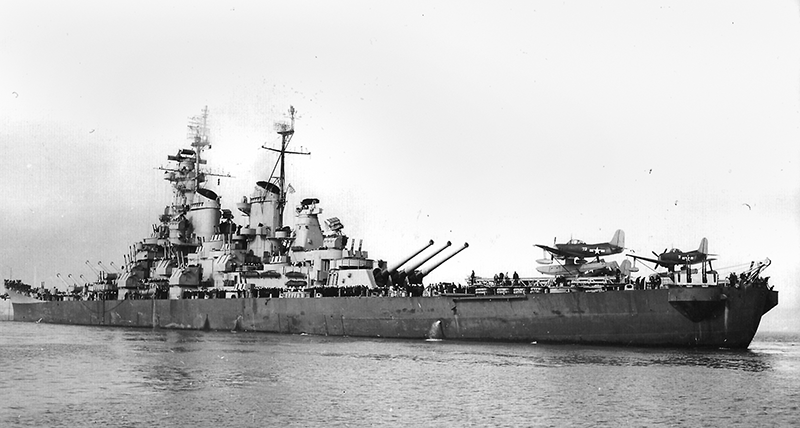
Iowa
Ships
| No | Name | Yard No | Builder | Laid down | Launched | Comm | Fate |
|---|---|---|---|---|---|---|---|
| BB61 | Iowa | New York N Yd, Brooklyn | 27.6.1940 | 27.8.1942 | 22.2.1943 | stricken 3.2006 | |
| BB62 | New Jersey | Philadelphia N Yd | 16.9.1940 | 7.12.1942 | 23.5.1943 | stricken 1.1999 | |
| BB63 | Missouri | New York N Yd, Brooklyn | 6.1.1941 | 29.1.1944 | 11.6.1944 | stricken 1.1995 | |
| BB64 | Wisconsin | Philadelphia N Yd | 25.1.1941 | 7.12.1943 | 16.4.1944 | stricken 3.2006 | |
| BB65 | Illinois | Philadelphia N Yd | 6.12.1942 | --- | --- | cancelled 12.8.1945 | |
| BB66 | Kentucky | Norfolk N Yd, Portsmouth | 6.12.1942 | 20.1.1950 | --- | suspended 17.2.1947, sold for BU 9.1958 |
Technical data
| Data variant | as commissioned | 1982-1988 modernization |
|---|---|---|
| Displacement standard, t | 48110 |
50453 |
| Displacement full, t | 57540 |
59065 |
| Length, m | 262,1 wl 270.4 oa |
262,1 wl 270.4 oa |
| Breadth, m | 33.0 |
33.0 |
| Draught, m | 11.0 full load |
11.3 full load |
| No of shafts | 4 |
4 |
| Machinery | 4 sets General Electric geared steam turbines, 8 Babcock & Wilcox boilers |
4 sets General Electric geared steam turbines, 8 Babcock & Wilcox boilers |
| Power, h. p. | 212000 |
212000 |
| Max speed, kts | 32.5 |
32.5 |
| Fuel, t | oil 7621 |
oil 7621 |
| Endurance, nm(kts) | 15000 (15) | 15000 (15) |
| Armour, mm | BB61, 62: belt: 307 on 22mm plating, lower belt: 307 - 41 on 22mm plating, main deck: 178, upper deck: 38, splinter deck: 25 - 16, bulkheads: 287 - 216, barbettes: 295 - 439, turrets: 495 face, 184 crown, 260 sides, 305 rear, CT: 440 sides, 184 roof BB63, 64: belt: 307 on 22mm plating, lower belt: 307 - 41 on 22mm plating, main deck: 178, upper deck: 38, splinter deck: 25 - 16, bulkheads: 368 - 297, barbettes: 295 - 439, turrets: 495 face, 184 crown, 260 sides, 305 rear, CT: 440 sides, 184 roof |
BB61, 62: belt: 307 on 22mm plating, lower belt: 307 - 41 on 22mm plating, main deck: 178, upper deck: 38, splinter deck: 25 - 16, bulkheads: 287 - 216, barbettes: 295 - 439, turrets: 495 face, 184 crown, 260 sides, 305 rear, CT: 440 sides, 184 roof BB63, 64: belt: 307 on 22mm plating, lower belt: 307 - 41 on 22mm plating, main deck: 178, upper deck: 38, splinter deck: 25 - 16, bulkheads: 368 - 297, barbettes: 295 - 439, turrets: 495 face, 184 crown, 260 sides, 305 rear, CT: 440 sides, 184 roof |
| Armament | BB61: 3 x 3 - 406/50 Mk 7, 10 x 2 - 127/38 Mk 12, 15 x 4 - 40/56 Mk 1.2, 60 x 1 - 20/70 Mk 4, 2 catapults, 3 seaplanes (OS2U, SOC, SO3C) BB62, 63: 3 x 3 - 406/50 Mk 7, 10 x 2 - 127/38 Mk 12, 20 x 4 - 40/56 Mk 1.2, 49 x 1 - 20/70 Mk 4, 2 catapults, 3 seaplanes (OS2U, SOC, SO3C) BB64: 3 x 3 - 406/50 Mk 7, 10 x 2 - 127/38 Mk 12, 20 x 4 - 40/56 Mk 1.2, 2 x 2 - 20/70 Mk 4, 49 x 1 - 20/70 Mk 4, 2 catapults, 3 seaplanes (OS2U, SOC, SO3C) |
8 x 4 Tomahawk CruM (32 BGM-109B), 4 x 4 Harpoon SSM (16 RGM-84A), 3 x 3 - 406/50 Mk 7 (BB61), 6 x 2 - 127/38 Mk 28, 4 x 6 - 20/76 Mk 15 Phalanx, helicopter deck |
| Electronic equipment | BB61: SK, 2x SG, Mk 3, 2x Mk 8, 4x Mk 4 radars BB62: SK, 2x SG, Mk 3, 2x Mk 8, 4x Mk 4 radars BB63: SK-2, 2x SG, Mk 27, 2x Mk 8, 4x Mk 12.22 radars BB64: SK, 2x SG, Mk 27, 2x Mk 8, 4x Mk 12.22 radars |
BB61, 63, 64: SPS-49, SPS-67, SPS-64, 2x Mk 13, 4x Mk 25 radars, SLQ-32(v)3 ECM suite, 8x SRBOC Mk36 decoy RL, SLQ-25 Nixie torpedo decoy BB62: SPS-49, SPS-10F, SPS-64, 2x Mk 13, 4x Mk 25 radars, SLQ-32(v)3 ECM suite, 8x SRBOC Mk36 decoy RL, SLQ-25 Nixie torpedo decoy |
| Complement | 1921 |
1518 |
Standard scale images

Iowa 1943

Missouri 1944
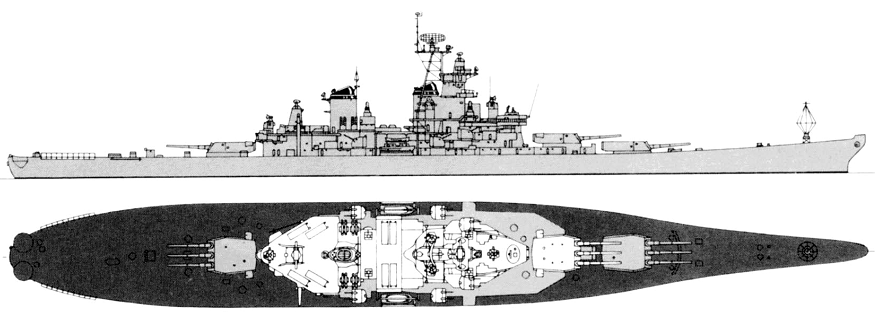
Iowa 1990
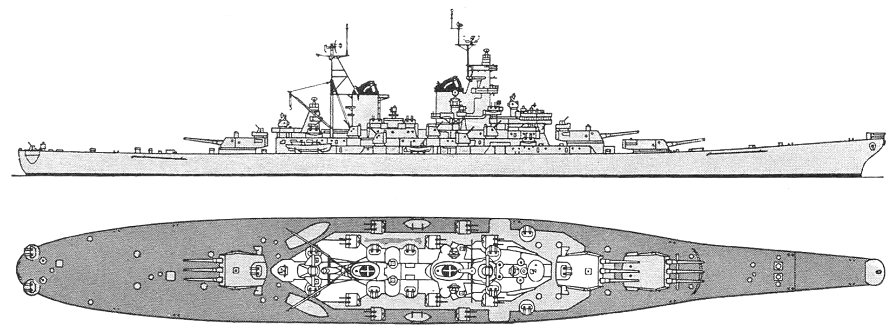
Iowa 1963
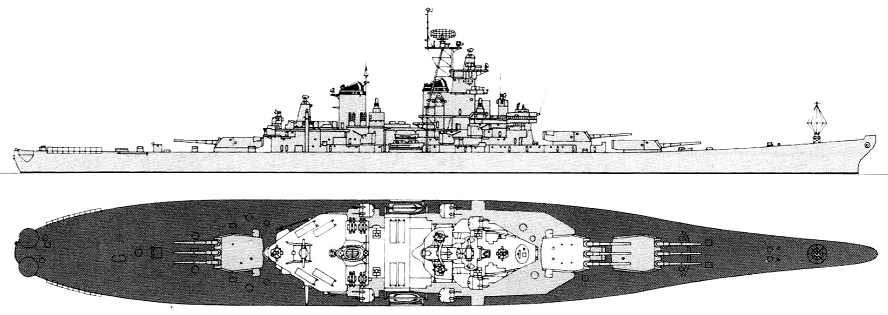
Iowa 2000
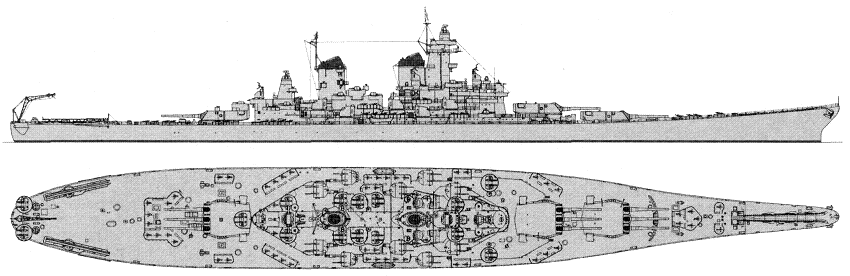
Iowa 1943
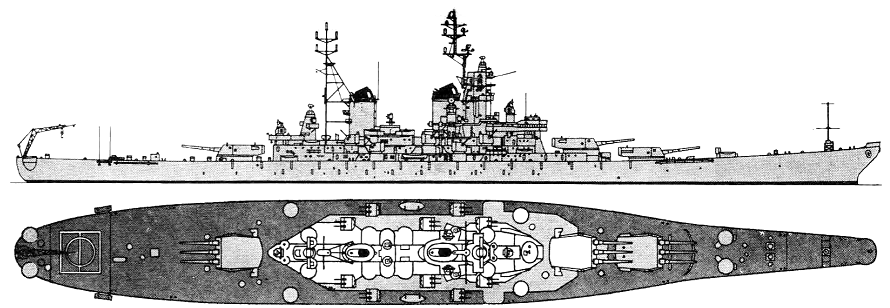
Iowa 1979
Graphics
Iowa
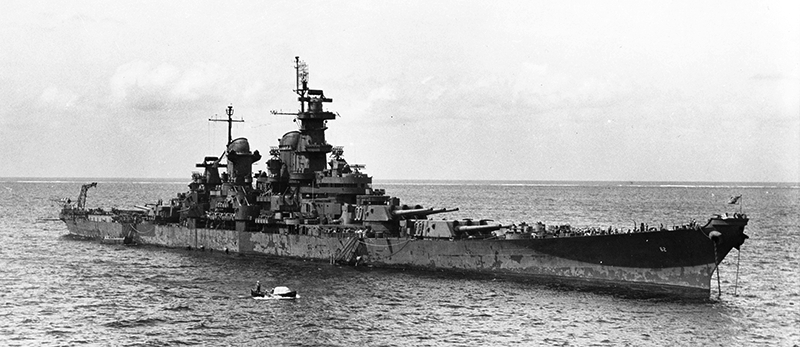
New Jersey
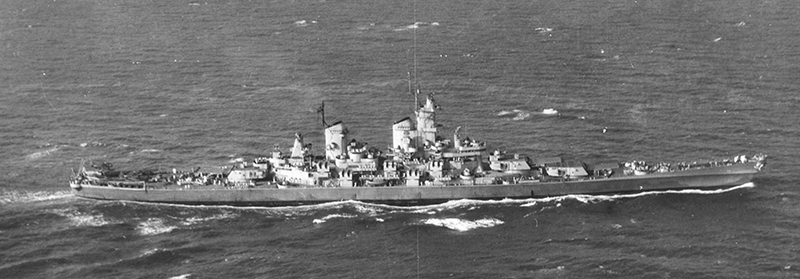
Wisconsin 1944
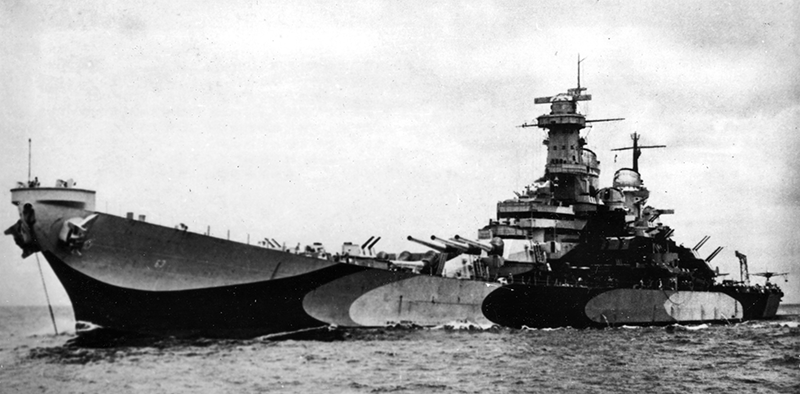
Missouri
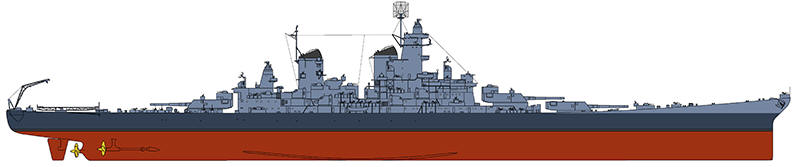
Wisconsin 1944 (Navypedia)
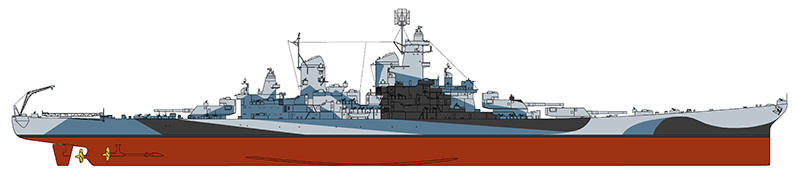
Missouri 1944 (Navypedia)
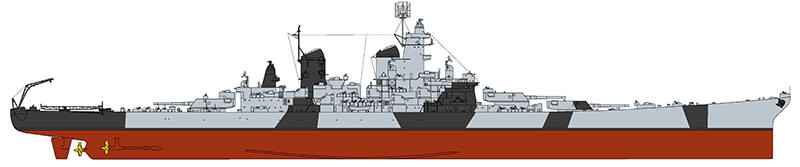
Iowa 1945 (Navypedia)
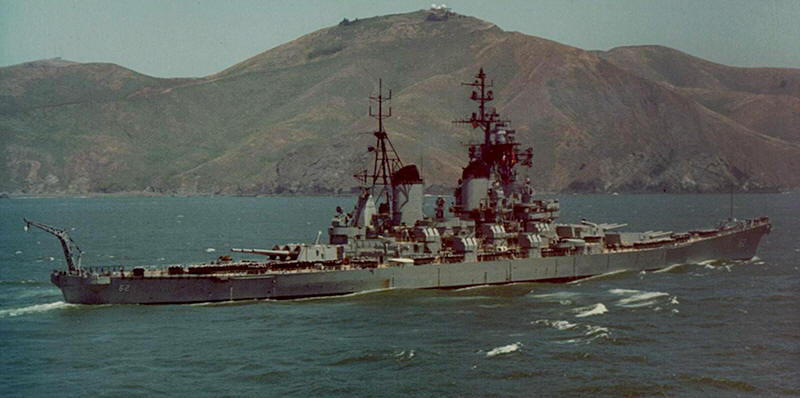
New Jersey entering San Francisco Bay, 24.6.1969
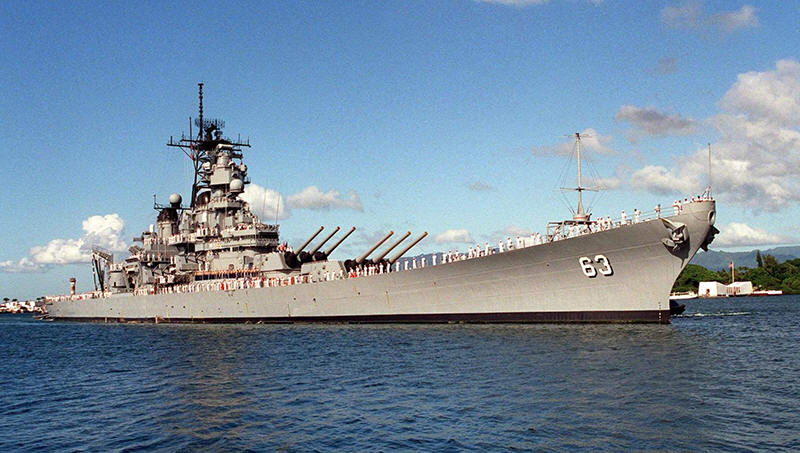
Missouri 1991
Project history
Designing of Iowa class was begun in 1938. At definition of their data elements the General Board returned to idea of a battleship for support of fast carrier forces and their protection against Japanese heavy and battlecruisers (North Carolina class battleships originally were designed for these tasks and should have 30kts speed). By the moment of beginning of design works limitations of 1936 London Naval conference, owing to abandoning of Japan to sign the document, have been lifted from 35000 to 45000t of standard displacement, and allowed artillery calibre raised from 356 to 406mm. It allowed to create the ship with protection and armament not yielding accepted on South Dakota class, having used a gain of displacement on more powerful machinery. In Iowa design the hull have lengthened almost on 70m at the same breadth (the limited breadth of Panama canal). Increased L/B ratio together with on 60% more powerful machinery should ensure 33kts speed. Increased length of protected citadel led to growth of armour weight though thickness of its elements, in comparison with South Dakota class, practically have not changed. Unique difference became increased to 368mm transverse bulkheads thickness, since the third ship of a class.
Iowa class ships received new 406mm/50 guns. Occurrence of this artillery system is curiously enough: at protection and armament, similar of South Dakota, 10000t displacement growth has gone only on speed increase to 6kts, that could serve as a subject for critic of new design. At the same time the big number of ready 406/50mm guns (manufactured in the early twenties for battleships and battlecruisers become victims of the Washington conference) was ready or nearly so in Naval arsenals. Usage of these guns in new design allowed both to save the finance, and to justify growth of displacement by transition to new artillery system. But it has appeared, that fitting of 406/50mm guns conducts to additional growth of displacement (still approximately on 2000t). The exit has been found in manufacturing of new guns, the blessing there was a reserve on designing. As well as on predecessors, heavy AA armament have been presented by 10 127mm guns in twin mountings which were supplemented by 4 x 4 28mm Mk 1 guns and 12 12.7mm MGs.
The design was approved in June, 1938, next year the order for ВВ61 and ВВ62 under the FY1940 programme was given out. In July, 1939 the decision about building of ВВ63 and ВВ64 (FY1940) followed, and in September, 1939 building of ВВ65 and ВВ66 was approved.
Building of battleships was conducted very qickly, and in 1943 the first pair was ready. ВВ61 should become flagship and differed by larger CT. Ligh AA armament was changed during building: instead of 28mm and 12.7mm MGs ships received 40mm Boforses and 20mm Oerlikons.
The second pair became operational in 1944, then building of ВВ65 and ВВ66 was at first suspended, and later cancelled.
Ship protection
(BB61, 62): 141.4m inner belt, inclined at 19° to vertical, had 3.2m height and was 307mm thick (on 51mm cement layer and 22mm plating). This belt was covered by vertical 38mm outer belt. 19°inclined 8.5m in height lower belt was connected with main belt and tapered from 307mm at upper edge to 41mm at lower edge. Belt was connected with end barbettes by bulkheads. Thickness of fore bulkhead was 287mm, but at lower part of bulkhead it was decreased to 216mm. Aft bulkhead has 287mm thickness only to one level under main deck, its lower part was only 16mm thick but it was connected with steering gear belt. Steering gear compartment had 343mm 19°inclined belt and 287mm bulkhead expanded up to lower (splinter) deck. Flat main armour deck was connected with upper edge of belt and was 178 (near sides)-152mm (near center line) over citadel. One level higher there was 38mm upper deck. One level lower there was flat 16mm (25mm over magazines) splinter deck. This deck extended aft from No3 barbette and was 157-142mm over steering gear belt. Main gun turrets had 432mm (on 63mm plating) faces, 241mm (on 19mm plating) sides, 300mm rears and 184mm crowns. Barbettes over main deck were 294mm at center line and 440mm at sides, but thickness decreased to 76-38mm under main deck. CT had 440mm sides and 184mm roof. 5.45m deep underwater protection consisted from 4 compartments and could resist exploding of 317kg TNT. Inner main and lower belts were used as 3rd longitudinal bulkhead.
(BB63, 64): 141.4m inner belt, inclined at 19° to vertical, had 3.2m height and was 307mm thick (on 51mm cement layer and 22mm plating). This belt was covered by vertical 38mm outer belt. 19°inclined 8.5m in height lower belt was connected with main belt and tapered from 307mm at upper edge to 41mm at lower edge. Belt was connected with end barbettes by bulkheads. Thickness of fore bulkhead was 368mm, but at lower part of bulkhead it was decreased to 297mm. Aft bulkhead has 368mm thickness only to one level under main deck, its lower part was only 16mm thick but it was connected with steering gear belt. Steering gear compartment had 343mm 19°inclined belt and 287mm bulkhead expanded up to lower (splinter) deck. Flat main armour deck was connected with upper edge of belt and was 178 (near sides)-152mm (near center line) over citadel. One level higher there was 38mm upper deck. One level lower there was flat 16mm (25mm over magazines) splinter deck. This deck extended aft from No3 barbette and was 157-142mm over steering gear belt. Main gun turrets had 432mm (on 63mm plating) faces, 241mm (on 19mm plating) sides, 300mm rears and 184mm crowns. Barbettes over main deck were 294mm at center line and 440mm at sides, but thickness decreased to 76-38mm under main deck. CT had 440mm sides and 184mm roof. 5.45m deep underwater protection consisted from 4 compartments and could resist exploding of 317kg TNT. Inner main and lower belts were used as 3rd longitudinal bulkhead.
Ship protection after modernization (BB61, 62): 141.4m inner belt, inclined at 19° to vertical, had 3.2m height and was 307mm thick (on 51mm cement layer and 22mm plating). This belt was covered by vertical 38mm outer belt. 19°inclined 8.5m in height lower belt was connected with main belt and tapered from 307mm at upper edge to 41mm at lower edge. Belt was connected with end barbettes by bulkheads. Thickness of fore bulkhead was 287mm, but at lower part of bulkhead it decreased to 216mm. Aft bulkhead has 287mm thickness only to one level under main deck, its lower part was only 16mm thick but it was connected with steering gear belt. Steering gear compartment had 343mm 19°inclined belt and 287mm bulkhead expanded up to lower (splinter) deck. Flat main armour deck was connected with upper edge of belt and was 178 (near sides)-152mm (near center line) over citadel. One level upper there was 38mm upper deck. One level lower there was flat 16mm (25mm over magazines) splinter deck. This deck extended aft from No3 barbette and was 157-142mm over steering gear belt. Main gun turrets had 432mm (on 63mm plating) faces, 241mm (on 19mm plating) sides, 300mm rears and 184mm crowns. Barbettes over main deck were 294mm at center line and 440mm at sides, but thickness decreased to 76-38mm under main deck. CT had 440mm sides and 184mm roof. 5.45m deep underwater protection consisted from 4 compartments and could resist exploding of 317kg TNT. Inner main and lower belts were used as 3rd longitudinal bulkhead.
Ship protection after modernization (BB63, 64): 141.4m inner belt, inclined at 19° to vertical, had 3.2m height and was 307mm thick (on 51mm cement layer and 22mm plating). This belt was covered by vertical 38mm outer belt. 19°inclined 8.5m in height lower belt was connected with main belt and tapered from 307mm at upper edge to 41mm at lower edge. Belt was connected with end barbettes by bulkheads. Thickness of fore bulkhead was 368mm, but at lower part of bulkhead it decreased to 297mm. Aft bulkhead has 368mm thickness only to one level under main deck, its lower part was only 16mm thick but it was connected with steering gear belt. Steering gear compartment had 343mm 19°inclined belt and 287mm bulkhead expanded up to lower (splinter) deck. Flat main armour deck was connected with upper edge of belt and was 178 (near sides)-152mm (near center line) over citadel. One level upper there was 38mm upper deck. One level lower there was flat 16mm (25mm over magazines) splinter deck. This deck extended aft from No3 barbette and was 157-142mm over steering gear belt. Main gun turrets had 432mm (on 63mm plating) faces, 241mm (on 19mm plating) sides, 300mm rears and 184mm crowns. Barbettes over main deck were 294mm at center line and 440mm at sides, but thickness decreased to 76-38mm under main deck. CT had 440mm sides and 184mm roof. 5.45m deep underwater protection consisted from 4 compartments and could resist exploding of 317kg TNT. Inner main and lower belts were used as 3rd longitudinal bulkhead.
Modernizations 7.
1943, Iowa: - 8 x 1 - 20/70; + 4 x 4 - 40/56 Mk 1.2
3/1945, Iowa: - SG, SK, Mk 3, 2x Mk 8, 4x Mk 4 radars; + 8 x 2 - 20/70 Mk 4, SC-2, SK-2, SP, SU, 2x Mk 13, 4x Mk 12.22, Mk 27 radars, TDY ECM suite
5/1945, Missouri: + 8 x 2 - 20/70 Mk 4, SP radar, TDY ECM suite
5/1945, Wisconsin: - 2x Mk 8 radars; + 6 x 2 - 20/70 Mk 4, SR, 2x Mk 13 radars, TDY ECM suite
6/1945, New Jersey: - SG, SK, Mk 3, 2x Mk 8, 4x Mk 4 radars; + 8 x 2 - 20/70 Mk 4, SK-2, SP, 2x Mk 13, 4x Mk 12.22, Mk 27 radars, TDY ECM suite
late 1945, Iowa: - 20 x 1 - 20/70
late 1945, New Jersey, Missouri, Wisconsin: - 17 x 1 - 20/70
1/1946, BB61 Iowa: 3 x 3 - 406/50 Mk 7, 10 x 2 - 127/38 Mk 28, 19 x 4 - 40/60 Mk 2, 8 x 2 - 20/70 Mk 24, 32 x 1 - 20/70 Mk 10, 2 catapults, 3 seaplanes, SC-2, SK-2, SP, SU, SG, Mk 27, 2x Mk 13, 4x Mk 12.22 radars, TDY ECM suite
1/1946, BB62 New Jersey: 3 x 3 - 406/50 Mk 7, 10 x 2 - 127/38 Mk 28, 20 x 4 - 40/60 Mk 2, 8 x 2 - 20/70 Mk 24, 32 x 1 - 20/70 Mk 10, 2 catapults, 3 seaplanes, SG, SK-2, SP, Mk 27, 2x Mk 13, 4x Mk 12.22 radars, TDY ECM suite
1/1946, BB63 Missouri: 3 x 3 - 406/50 Mk 7, 10 x 2 - 127/38 Mk 28, 20 x 4 - 40/60 Mk 2, 8 x 2 - 20/70 Mk 24, 32 x 1 - 20/70 Mk 10, 2 catapults, 3 seaplanes, SK-2, 2x SG, SP, Mk 27, 2x Mk 8, 4x Mk 12.22 radars, TDY ECM suite
1/1946, BB64 Wisconsin: 3 x 3 - 406/50 Mk 7, 10 x 2 - 127/38 Mk 28, 20 x 4 - 40/60 Mk 2, 8 x 2 - 20/70 Mk 24, 32 x 1 - 20/70 Mk 10, 2 catapults, 3 seaplanes, SK, 2x SG, SR, 2x Mk 13, Mk 27, 4x Mk 12.22 radars, TDY ECM suite
1946-1948, all: - 4 x 4 - 40/60, 8 x 2 - 20/70, 32 x 1 - 20/70, 2 catapults, 3 seaplanes
1948, Missouri, New Jersey: + SR-3 radar
1948, Missouri; 1950, New Jersey; 1951, Iowa, Wisconsin: - 8 x 2 - 20/70; + 3 helicopters, SG-6, SPS-6 radars
1951, Iowa: + 4 x 4 - 40/60 Mk 2
1951, New Jersey, Wisconsin: + 4 x 4 - 40/60 Mk 2, 16 x 2 - 20/70 Mk 24
1951, Missouri: + 4 x 4 - 40/60 Mk 2, 32 x 2 - 20/70 Mk 24
1953, New Jersey: - SR-3 radar; + SPS-6 radar
1953, Wisconsin: - 2 x 4 - 40/60, SR radar; + SPS-8, SPS-12 radars
1952-1954, all: - 4x Mk 12.22 radars; + SPS-10, 4x Mk 25 radars
1954-1955, Iowa, New Jersey, Missouri: - SP radar; + SPS-8 radar
1956, Wisconsin: - 2 x 4 - 40/60
1954-1955, Iowa: - 4x Mk 25 radars, + 6x Mk 35, 2x Mk 39 radars
1954-1955, New Jersey: - 2 x 4 - 40/60, 4x Mk 25 radars, + 6x Mk 35, 2x Mk 39 radars
1954-1955, Iowa: - 4 x 4 - 40/60
1956, Iowa: + SPS-12 radar
1956, New Jersey: - SPS-6 radar; + SPS-12 radar
1967-1968, New Jersey: - 18 x 4 - 40/60, TDY ECM suite; + SPS-10 radar, ULQ-6B ECM suite, 4x Chaffroc decoy LR
1982, New Jersey; 1983, Iowa; 1986, Missouri; 1988, Wisconsin were modernized as follows:
Naval service
Iowa was damaged during a storm 17.12.1944 and was under repair till March, 1945.
(Navypedia)